We are pleased to share with you the 50 most downloaded Nature
Communications articles* in chemistry and materials sciences published in 2020.
Featuring authors from around the world, these papers highlight valuable
research from an international community.
* Data obtained from SN Insights (based on Digital Science's Dimensions) and has been normalised to account for articles
published later in the year.


Conducting polymers are promising material candidates in diverse applications including energy
storage, fl exible electronics, and bioelectronics. However, the fabrication of conducting
polymers has mostly relied on conventional approaches such as ink-jet printing, screen printing,
and electron-beam lithography, whose limitations have hampered rapid innovations and broad
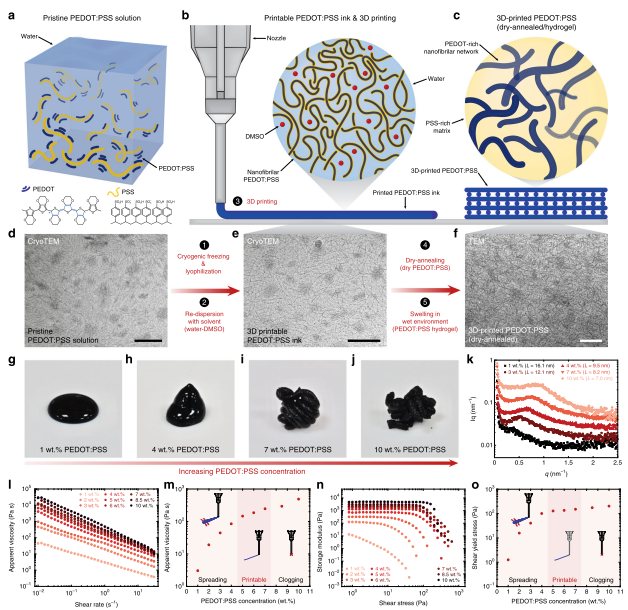
applications of conducting polymers. Here we introduce a highperformance 3D printable
conducting polymer ink based on poly(3,4-ethylenedioxythiophene):polystyrene sulfonate
(PEDOT:PSS) for 3D printing of conducting polymers. The resultant superior printability
enables facile fabrication of conducting polymers into high resolution and high aspect ratio
microstructures, which can be integrated with other materials such as insulating elastomers
via multi-material 3D printing. The 3D-printed conducting polymers can also be converted
into highly conductive and soft hydrogel microstructures. We further demonstrate fast
and streamlined fabrications of various conducting polymer devices, such as a soft neural probe
capable of in vivo single-unit recording.

原文链接:https://www.nature.com/collections/hjcididjag